- africano
- albanese
- amarico
- Arabo
- armeno
- azero
- basco
- bielorusso
- bengalese
- bosniaco
- bulgaro
- catalano
- Cebuano
- Cina
- Cina (Taiwan)
- Corso
- croato
- ceco
- danese
- Olandese
- Inglese
- esperanto
- estone
- finlandese
- francese
- Frisone
- galiziano
- georgiano
- Tedesco
- greco
- gujarati
- Creolo haitiano
- haussa
- hawaiano
- ebraico
- No
- Miao
- ungherese
- islandese
- igbo
- indonesiano
- irlandesi
- Italiano
- giapponese
- giavanese
- Kannada
- kazako
- Khmer
- ruandese
- coreano
- Curdo
- Kirghizistan
- Lavoro
- latino
- lettone
- lituano
- lussemburghese
- macedone
- Malgasci
- malese
- malayalam
- maltese
- Maori
- Marathi
- mongolo
- Birmania
- nepalese
- norvegese
- norvegese
- occitano
- Pashtu
- persiano
- Polacco
- portoghese
- Punjabi
- rumeno
- russo
- samoano
- Gaelico Scozzese
- serbo
- Inglese
- Shona
- Sindhi
- singalese
- slovacco
- sloveno
- Somalo
- spagnolo
- sundanese
- swahili
- svedese
- Tagalo
- tagico
- Tamil
- Tartaro
- telugu
- tailandese
- Turco
- turkmeno
- ucraino
- Urdu
- uiguro
- uzbeco
- vietnamita
- gallese
- Aiuto
- yiddish
- Yoruba
- Zulù


Gen . 16, 2026 14:19 Torna alla lista
Field Fence Height Requirements for Different Livestock.
Choosing the correct height for your field fence is one of the most critical decisions in livestock management and property security. An improperly sized fence can lead to escaped animals, predator attacks, injured livestock, and significant financial loss. This comprehensive guide provides detailed field fence height requirements for different livestock, empowering you to build a perimeter that ensures safety, security, and peace of mind. We will explore why a modern high tensile field fence is the superior choice for durability and economy, and delve into the specific engineering needed for an effective wire fence for goats, known as the ultimate escape artists of the farm.
Understanding the Critical Role of Field Fence Height and Material
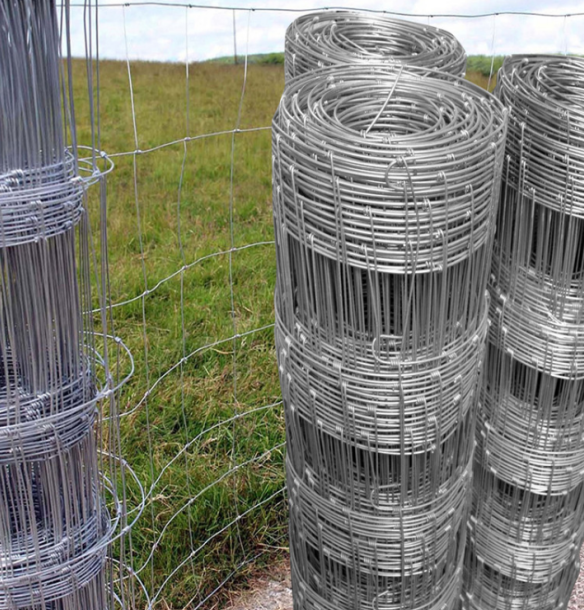
The primary purpose of a field fence is to create a secure, lasting boundary. Height is the first line of defense against animals jumping over, while the material and construction determine its ability to withstand pressure, weather, and time. Different livestock possess varying abilities: a sheep may rarely challenge a fence's top, but a horse or cow leaning against it exerts tremendous force. Similarly, a standard fence that contains cattle may be a mere ladder for a goat. This is where understanding species-specific behavior and pairing it with the right material becomes paramount. A high tensile field fence is engineered to meet these challenges. Made from steel wire with a higher carbon content, it is not just strong but maintains exceptional tensile strength and elasticity. This means it can absorb the impact of a charging animal or sustained pressure without breaking, often springing back to its original shape. For the demanding task of containing agile climbers like goats, the standard field fence must be adapted into a specialized wire fence for goats, incorporating smaller mesh patterns and strategic reinforcement to counter their unique behaviors like climbing, rooting, and squeezing through gaps.
Detailed Field Fence Height Requirements for Different Livestock
A one-size-fits-all approach fails in livestock field fence. Here is a breakdown of recommended minimum heights for common animals, considering both containment and predator deterrence.
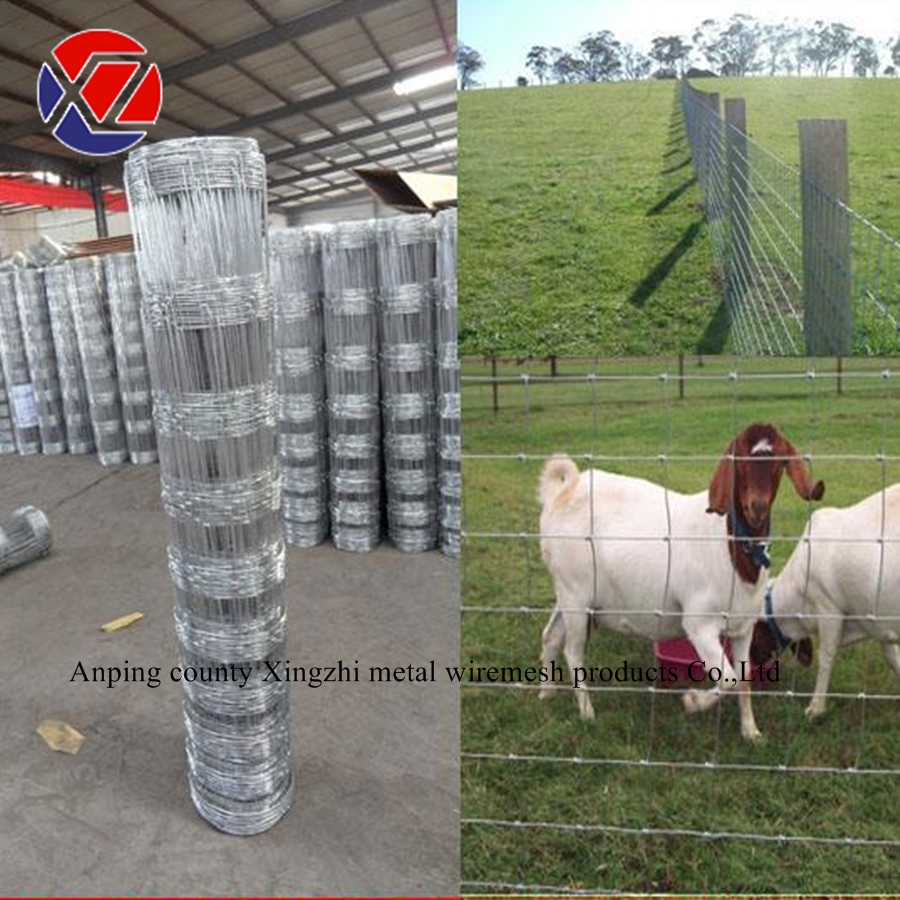
Sheep and Goats: This category demands careful attention. For sheep, a finished height of 1.0 to 1.2 meters (40 to 48 inches) is standard. However, for goats, height alone is insufficient. A wire fence for goats must be at least 1.2 to 1.5 meters (4 to 5 feet) tall. The greater challenge is preventing them from putting their heads through the mesh or climbing. Therefore, the mesh pattern—often a rigid 2"x4" or 2"x6" grid—is as important as the height. For predator protection, especially for sheep, an extra strand of electric wire or barbed wire at the top and bottom can be essential.
Cattle: For most beef and dairy cattle, a fence height of 1.2 to 1.4 meters (4 to 4.5 feet) is effective. For larger, more athletic breeds like bulls or exotics, increasing this to 1.5 meters (5 feet) or more is advisable. The real key with cattle is not just height but the strength of the fence to withstand rubbing and pushing. A multi-strand high tensile field fence is ideal, as its tighter, springier wires deter leaning and are highly visible to animals.
Horses: Horses are visually-oriented and generally respect well-maintained fences. A height of 1.3 to 1.5 meters (4.5 to 5 feet) is standard for pastures. For stallions or in high-traffic areas, up to 1.7 meters (5.5 feet) may be used. Safety is paramount; the fence should have no sharp edges, and smaller mesh at the bottom can prevent foals from rolling through. A tightly strung high tensile field fence with a smooth, polymer coating is an excellent, durable choice for equine safety.
Why High Tensile Field Fence is the Superior Investment
When constructing a perimeter for any livestock, the choice of material defines its lifespan and effectiveness. A high tensile field fence represents a modern upgrade from traditional low-carbon wire, offering unmatched advantages that translate into long-term value.
- Unmatched Strength and Durability: The high-carbon steel wire has a much greater tensile strength (typically 150,000-200,000 PSI), meaning it can withstand significant impact and constant pressure without snapping. It is also more resistant to stretching under its own weight or from animal contact.
- Longer Span, Lower Cost: Its strength allows for wider spacing between line posts—often up to 4-5 meters (12-16 feet)—compared to 2.5-3 meters (8-10 feet) for standard fence. This significantly reduces the number of posts, digging labor, and overall project cost.
- Superior Longevity: High tensile field fence is always heavily galvanized, often with a zinc coating weight exceeding 70 g/m², and is frequently available with an additional polymer coating. This offers exceptional corrosion resistance, ensuring the fence remains functional and attractive for 20-30 years or more, even in harsh climates.
- Animal and Farmer Friendly: The springy, elastic nature of the fence gives on impact, reducing the risk of injury to animals that run into it. It also maintains a tighter, neater appearance with less sagging over time, making it easier to inspect and maintain.
Engineering the Ultimate Wire Fence for Goats
Goats are intelligent, curious, and dexterous, making them the ultimate test for any fence. Building a wire fence for goats requires a strategy that addresses all their escape methods: jumping, climbing, head-butting, and squeezing.
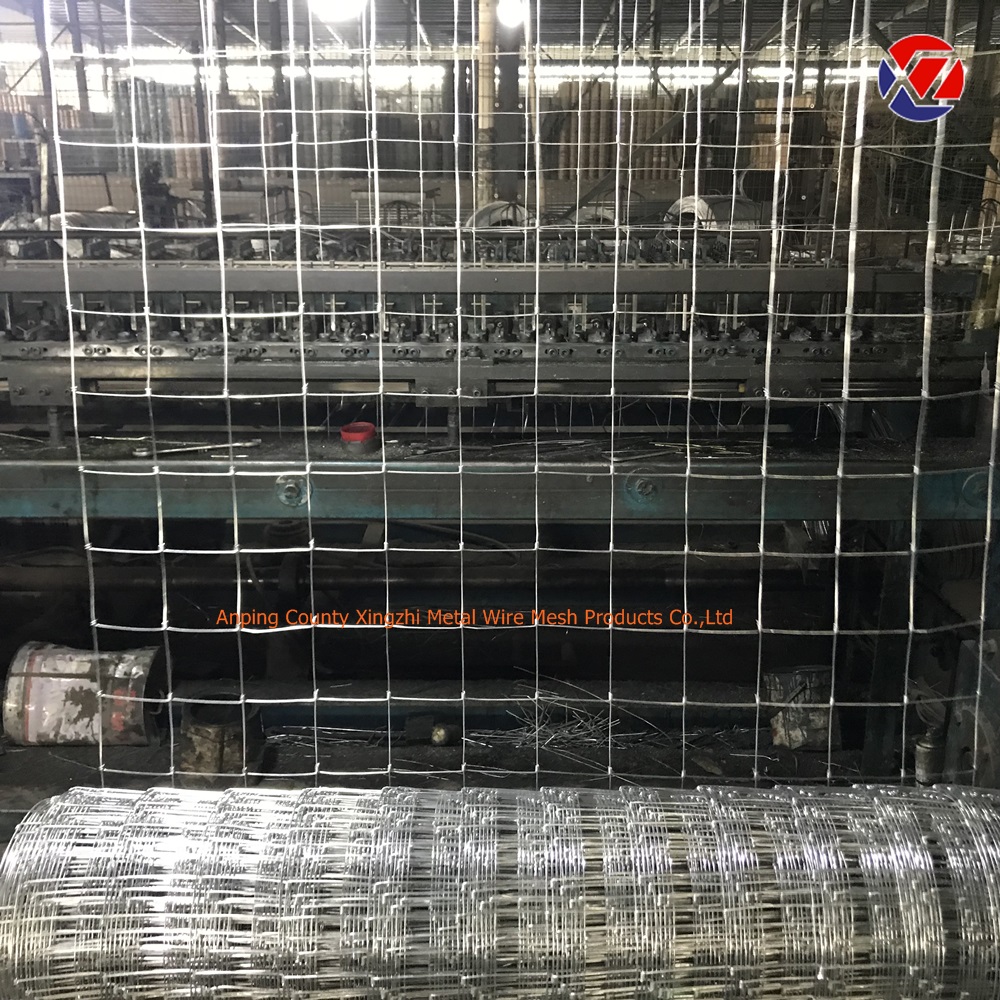
Mesh Size is Critical: The vertical spacings (stay wires) should be close enough to prevent a goat from getting its head through, as once its head is through, its body will follow. A grid pattern no larger than 6 inches by 6 inches (15cm x 15cm), and preferably 4"x4" or 2"x4", is recommended. This small, rigid mesh prevents climbing footholds.
The Power of Combination: The most effective wire fence for goats often combines materials. A core of woven field fence with the above mesh size can be augmented with electrified wires. A single electric strand placed 6-8 inches inside the main fence at goat-nose height acts as a powerful psychological and physical deterrent, teaching them to respect the boundary without relying solely on physical barrier strength.
FAQs About Field Fence
What is the minimum field fence height for sheep?
For containing sheep, a minimum finished field fence height of 1.0 meter (40 inches) is recommended. However, for enhanced security against predators or more adventurous breeds, a height of 1.2 meters (48 inches) is advisable. This is often achieved with a woven wire mesh of 80-90 cm height, topped with one or two strands of barbed or electric wire to reach the total height. The smaller mesh at the bottom also helps protect vulnerable lambs.
How does high tensile field fence save money long-term?
While the initial material cost of a high tensile field fence may be slightly higher, it saves substantial money over its lifetime. Its extreme durability and corrosion resistance mean it can last 2-3 times longer than standard fencing without needing replacement. Its strength allows for wider post spacing, cutting down on the number of posts and installation labor by up to 30%. Furthermore, its resistance to sagging and breaking drastically reduces annual maintenance and repair costs, offering a far better return on investment.
Why is a standard wire fence for goats?
A standard field fence with large, flexible mesh is inadequate for goats because they will use the mesh as a ladder to climb, get their heads stuck, or push through weak spots. A specialized wire fence for goats uses a smaller, more rigid mesh pattern (like 2"x4") to eliminate footholds and prevent head penetration. It also often incorporates electric wires as a behavioral deterrent, addressing the intelligence and agility of goats that a passive barrier alone cannot reliably manage.
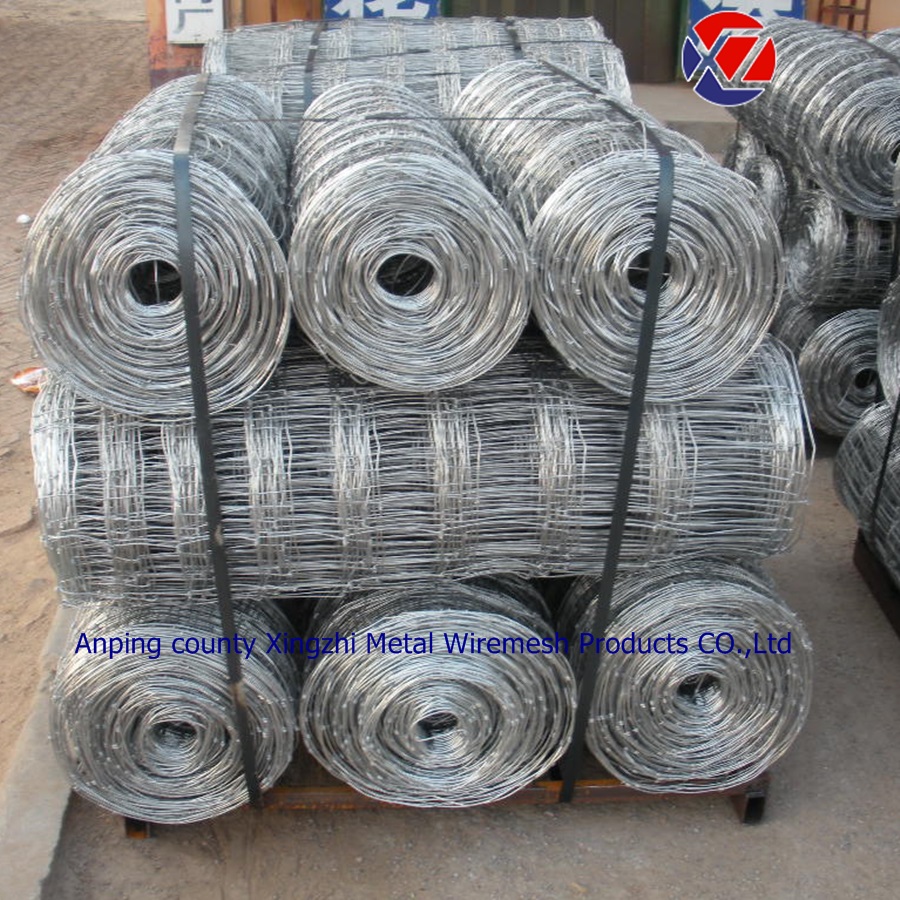
Can one field fence height work for mixed livestock?
It is possible to use a single field fence height for mixed livestock, but it must be designed for the most challenging animal in the group. If goats are present, the fence must be at least 1.4 meters (54 inches) tall and use a small mesh pattern. For groups like sheep and cattle together, a height of 1.2-1.3 meters with a multi-strand high tensile field fence can work well, provided the bottom is secure enough for sheep. The safest approach is to fence different species separately or design the perimeter to the highest requirement.
What are key features of a quality wire fence for goats?
A quality wire fence for goats features: 1) Heavy galvanization (e.g., ≥70g/m² zinc coating) for long-term rust prevention; 2) A small, rigid mesh pattern (e.g., 2"x4" or 4"x4") to prevent climbing and head entanglement; 3) High-tensile strength wire that resists stretching and impact; and 4) Optional polymer coating for added visibility and corrosion protection. Sourcing from an experienced manufacturer like Anping Xingzhi ensures these parameters are met, guaranteeing a fence that is built to contain goats effectively for decades.
Investing in the correct fence height and superior materials is the foundation of secure and efficient livestock management. For over 20 years, Anping County Xingzhi Metal Wiremesh Products Co., Ltd. has been a leading manufacturer of premium field fence, high tensile field fence, and specialized wire fence for goats. Our deep expertise ensures every product meets rigorous standards for strength, durability, and species-specific design. Trust us to provide the fencing solution that protects your investment and gives you lasting peace of mind. Contact us today to discuss your project needs.
-
Hop Dipped Galvanized/PVC Coated Temporary Fence-Durable, Versatile, Reliable|Anping County Xingzhi Metal Wiremesh Products Co., Ltd
NotiziaApr.14,2026
-
Hop Dipped Galvanized/PVC Coated Temporary Fence-Durable, Versatile, Reliable|Anping County Xingzhi Metal Wiremesh Products Co., Ltd
NotiziaApr.14,2026
-
Hop Dipped Galvanized/PVC Coated Temporary Fence-Durable, Versatile, Reliable|Anping County Xingzhi Metal Wiremesh Products Co., Ltd
NotiziaApr.14,2026
-
China PVC Coated Gabion Basket A Comprehensive Guide to Sourcing and Applications
NotiziaFeb.24,2026
-
China Gabion Wall Solutions for Construction and Erosion Control
NotiziaFeb.23,2026
-
Comprehensive Guide to China Gabion Bags Applications and Benefits
NotiziaFeb.22,2026