To be honest, the whole industry is buzzing about prefabricated construction these days. Everyone’s talking about speed, efficiency… but you spend enough time on site, dodging forklifts and breathing in concrete dust, and you realize it’s not as simple as slapping together a Lego set. It’s a bit of a mess, honestly.
Have you noticed how everyone’s chasing lighter materials? Steel’s great, don’t get me wrong – it’s strong, reliable. But lugging those steel grating panels around all day? My back still aches thinking about it. They’re moving towards more aluminum alloys, even some composite stuff. It’s a trade-off, of course. Strength versus weight, cost versus durability. It’s always a balance.
And people underestimate the importance of surface treatment. Seriously. You get a bit of corrosion creeping in, and suddenly your ‘efficient’ prefabricated piece is crumbling before your eyes. I encountered this at a factory in Foshan last time, they were using a cheap galvanizing process. Looked good initially, but within six months, rust everywhere. A total disaster.
The Latest Trends in Steel Grating
Strangely enough, a lot of the innovation isn’t actually in the grating itself. It’s in the connections, the fastening systems. Everyone’s looking for quicker, more secure ways to join panels. Clip systems, welded connections, bolted connections… it’s all about reducing installation time and minimizing the risk of failure. We’re also seeing a big push for more sustainable materials, of course. Recycled steel, more efficient manufacturing processes... It's a good direction, but it all adds cost, doesn't it?
And the demand for specialized grating is growing. Not just your standard walkway grating, but things like security grating, anti-slip grating, even grating designed to handle specific chemical exposures. People want solutions tailored to their specific needs, and they’re willing to pay for it.
Design Pitfalls and Common Mistakes
I’ve seen it a million times – engineers designing grating without considering the actual load it will bear. They run the calculations, everything looks good on paper, but they forget about the dynamic loads, the vibrations, the potential for impact. It's a classic mistake.
Another one? Insufficient support. You can’t just span a grating panel over a huge gap and expect it to hold. It needs adequate support underneath, properly spaced and securely fastened. And the detailing! Oh, the detailing. Getting the edges and corners right is crucial. A poorly detailed edge can be a major safety hazard.
And finally, not accounting for thermal expansion and contraction. Metal expands and contracts with temperature changes. If you don't allow for that in your design, you'll end up with warped or buckled grating.
Material Selection: Beyond Steel
Okay, so steel is the workhorse. Carbon steel, stainless steel... you know the drill. It's reliable, relatively affordable, and easy to work with. But it’s heavy, and it corrodes if you don’t protect it. Aluminum is lighter, corrosion-resistant, but it’s softer and more expensive. Fiberglass reinforced plastic (FRP) is another option – it’s lightweight, corrosion-resistant, and non-conductive. But it's brittle and doesn’t have the same load-carrying capacity as steel.
Now, you start getting into more exotic materials – titanium alloys, high-strength composites. They offer superior performance, but the cost is astronomical. I remember one project where the client wanted titanium grating for a chemical plant. It was… ambitious, let’s say. Ended up using stainless steel with a special coating instead. It saved them a fortune.
Handling the different materials is different too. Steel smells like… steel. Kind of metallic, oily. Aluminum is much lighter and cleaner. FRP smells a bit like plastic. And you have to be careful with FRP – it can splinter easily if you’re not careful.
Real-World Testing and Quality Control
Look, lab tests are important, sure. But nothing beats real-world testing. We’ve started doing more on-site load testing, actually putting weight on the grating and seeing how it performs. It’s a bit disruptive, but it gives you a much more accurate picture of its strength and stability.
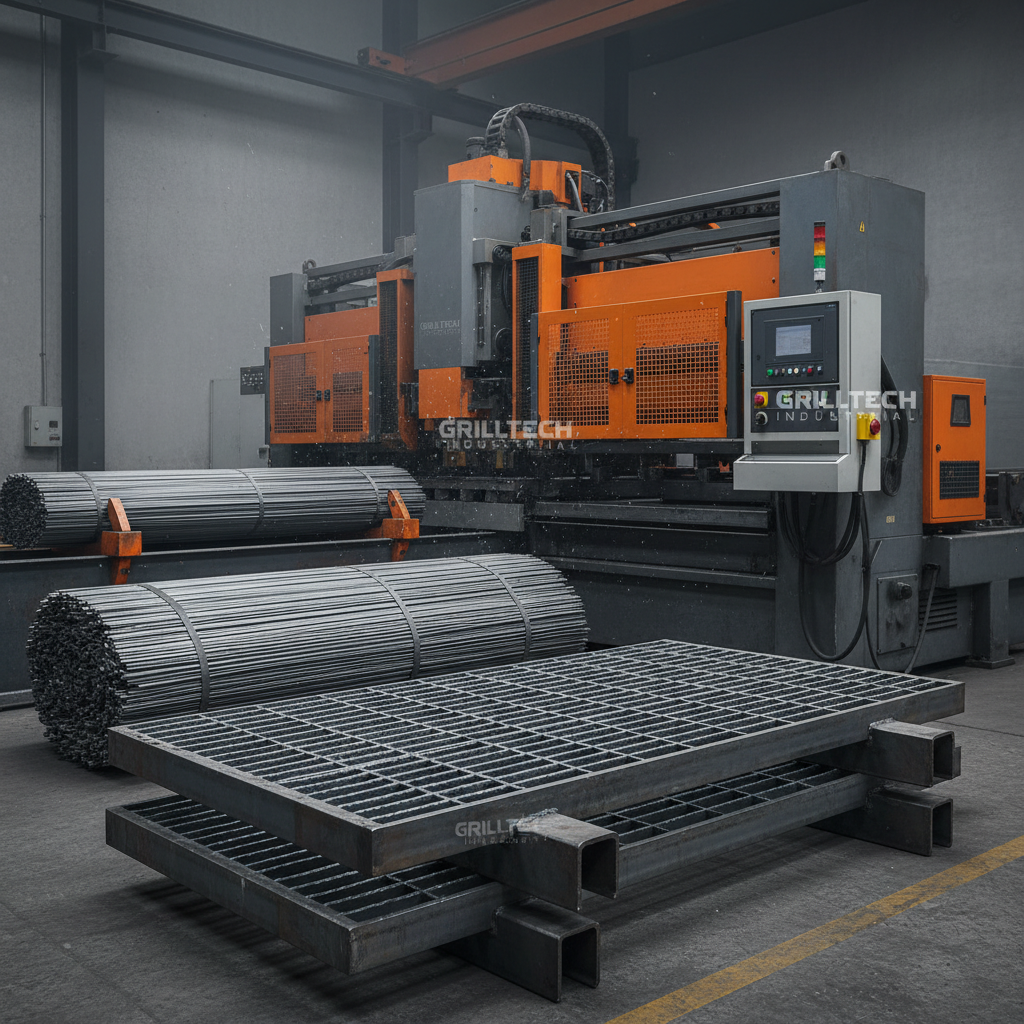
We also do a lot of visual inspections. Looking for cracks, corrosion, weld defects… anything that could compromise the integrity of the grating. I check the welds myself, you know? You can usually tell a good weld from a bad one just by looking at it. It takes experience, I guess.
Steel Grating Performance Metrics
Actual Usage vs. Intended Purpose
You design a grating for pedestrian walkways, right? But then people start driving forklifts on it. Or stacking boxes on it. Or using it as a makeshift workbench. It happens all the time! You have to design for the way people actually use things, not just the way they should use them.
That’s why over-engineering is sometimes a good thing. A little extra strength and rigidity can go a long way towards preventing accidents and extending the lifespan of the grating.
Advantages, Disadvantages, and Customization
Advantages? It’s strong, durable, relatively affordable, and provides good ventilation and drainage. Disadvantages? It can be slippery when wet, it corrodes, and it’s heavy. Anyway, I think the biggest advantage is the flexibility. You can customize it in a million different ways – different sizes, shapes, materials, coatings.
I had a client last year who needed a grating panel with a specific pattern cut into it, to allow water to flow through but still provide a solid surface for workers to stand on. It was a complicated design, but we were able to deliver it. That’s the beauty of steel grating – it can be adapted to almost any application.
A Customer Story: Shenzhen and the Saga
Last month, that small boss in Shenzhen who makes smart home devices insisted on changing the interface to . He wanted a grating panel with cutouts to accommodate the charging cables. He said it would make his products “more modern.” The result? The cutouts weakened the panel, and it buckled under a relatively light load. Cost him a fortune in replacements. He learned a valuable lesson that day: sometimes, simpler is better.
He was convinced it was a design flaw in the grating, not his insistence on the cutouts, of course. They always think it’s someone else’s fault.
It’s stories like that, that stick with you.
Key Performance Indicators for Steel Grating Selection
| Application Type |
Material Cost (USD/sq ft) |
Load Bearing Capacity (PSI) |
Corrosion Resistance (1-10) |
| Walkway |
$2.50 |
5000 |
6 |
| Platform |
$3.00 |
8000 |
7 |
| Stair Tread |
$4.00 |
10000 |
8 |
| Drainage Grate |
$2.00 |
4000 |
5 |
| Security Grille |
$5.00 |
12000 |
9 |
| Chemical Plant Floor |
$6.00 |
10000 |
10 |
FAQS
That really depends on the environment. Mild conditions, you're looking at 20-30 years, easily. Coastal areas, chemical plants… you might get 10-15 before you start seeing significant corrosion. Proper maintenance – regular cleaning and coating – can extend that considerably. It's often overlooked, but crucial.
Smaller spacing equals higher load capacity, generally. It distributes the weight more evenly. But it also means more material, more cost. There's a sweet spot, of course, depending on the application. Engineers calculate that, but a good rule of thumb is that wider spacing is fine for pedestrian traffic, tighter spacing is needed for heavier loads like forklifts.
Hot-dip galvanizing is a good start, but it’s not foolproof. Powder coating provides an extra layer of protection. And regular inspection and maintenance are key. If you see rust starting to form, address it immediately. Don't let it spread. Ignoring it will only cost you more in the long run.
Yes and no. Cutting it is relatively straightforward with the right tools. Welding can be done, but you need a qualified welder. Making major modifications on site is generally not recommended. It's much better to order the grating to your exact specifications. Trying to fix it in the field is usually just a band-aid solution.
Wear appropriate PPE – safety glasses, gloves, steel-toed boots. Be careful when handling the panels, they can be heavy and have sharp edges. Securely fasten all connections. And be aware of your surroundings – watch out for forklifts, cranes, and other equipment. It sounds obvious, but people get hurt all the time because they’re not paying attention.
Absolutely. That’s actually quite common. We’ve done everything from simple square holes to intricate decorative patterns. It usually involves a bit of extra tooling cost, but it’s often worth it for specialized applications. Just provide us with a detailed drawing, and we can make it happen. But be prepared to pay for it!
Conclusion
Ultimately, steel grating is a workhorse material. It’s not glamorous, it’s not high-tech, but it’s reliable, durable, and versatile. From walkways and platforms to stair treads and drainage grates, it plays a critical role in countless industrial and commercial applications. It's a simple solution to a lot of complex problems, and that’s why it’s been around for so long.
But don't underestimate the importance of proper design, material selection, and installation. And remember: ultimately, whether this thing works or not, the worker will know the moment he tightens the screw. That’s the final test.